
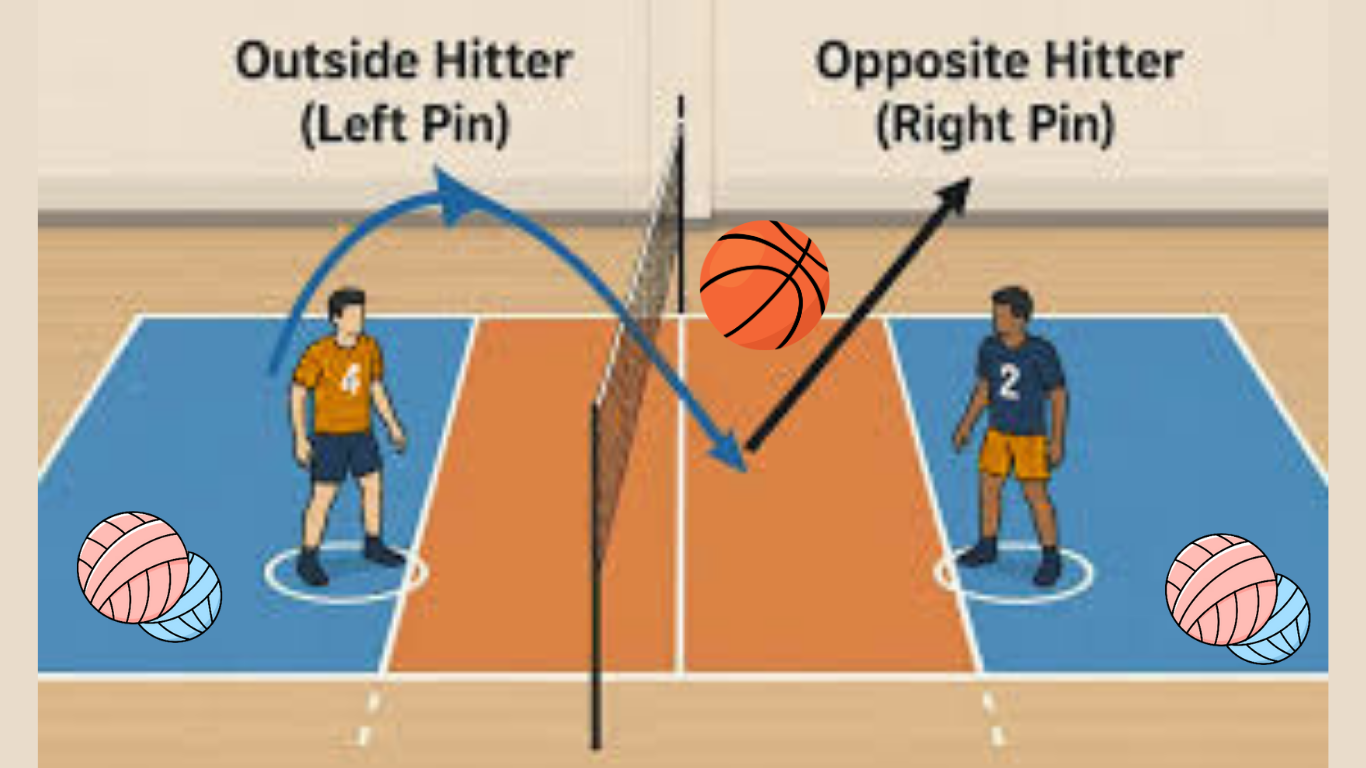
In right side hitter volleyball, power meets strategy. This dynamic court position is often underestimated but plays a crucial role in both offense and defense. Whether you’re an aspiring athlete or a coach aiming to build balanced lineups, mastering the right side hitter role is essential. These players are the backbone of efficient transitions, quick attacks, and crucial game-saving blocks that can change the momentum in seconds.
Right side hitters, sometimes referred to as opposite hitters, are versatile. They execute sharp cross-court spikes, deliver tough serves, and block the opponent’s strongest attackers. This guide dives deep into everything you need to know about becoming an exceptional right side hitter in volleyball from mastering the skills to understanding positioning, training, and mindset needed to dominate every match.
Understanding the Role of a Right Side Hitter in Volleyball
The right side hitter volleyball position, often called the opposite hitter, is positioned opposite the setter on the court. This player is responsible for executing attacks from the right side and serving as a defensive wall against the opponent’s left-side hitters. The opposite hitter must possess a blend of strength, agility, and strategic intelligence to adapt quickly during rallies.
Unlike outside hitters, who often handle more passing duties, the right side hitter focuses more on blocking and power hitting. They thrive when executing fast offensive plays set by the setter and provide a critical backup when the primary attackers are contained. In both men’s and women’s volleyball, the right side hitter is the hidden powerhouse responsible for scoring key points and balancing team offense.
Essential Skills Every Right Side Hitter Volleyball Player Must Master
To succeed as a right side hitter volleyball athlete, you need more than brute force you need precision and timing. The first skill is power hitting. This involves mastering arm swing mechanics, body rotation, and jump timing to generate explosive spikes even when attacking from difficult angles.
Equally important is blocking ability. Since right side hitters often face the opposing team’s strongest outside hitters, timing blocks and reading opponents’ movements are crucial. Great right side hitters also perfect their serve receive and back-row attacks. Though defense is not always their main role, being adaptable improves their team’s fluidity. Finally, communication and quick decision-making separate average hitters from elite ones ensuring the team’s offensive rhythm never breaks down.
Offensive and Defensive Responsibilities on the Court
A right side hitter volleyball player’s offensive role centers on executing precise attacks from the right front position. Their objective is to hit around or through blocks and catch defenses off guard with cross-court or line shots. They frequently perform back-row attacks (pipe or D-ball) when rotating to the backcourt, adding unpredictability to the offense.
Defensively, right side hitters act as key blockers against outside hitters. Their position allows them to close blocks with the middle blocker, forming a strong wall at the net. This dual role powerful offense combined with consistent defense makes them indispensable. The ability to transition seamlessly from blocking to attacking sets apart dominant right side hitters from inconsistent ones.
Training Techniques to Become an Elite Right Side Hitter
Becoming a top right side hitter volleyball player requires targeted training that builds strength, agility, and tactical skills. A strong workout plan should include plyometric exercises for explosive vertical jumps, shoulder conditioning for powerful hits, and core workouts to maintain balance during spikes and blocks.
On-court training should focus on timing drills with setters to perfect attacks, blocking drills to refine hand placement, and reaction time exercises to improve defensive reads. Moreover, video analysis helps players better understand angles and body mechanics. Practicing game-like scenarios, such as transitioning from serve receive to attack, ensures consistent performance under pressure. Combining physical strength with mental sharpness elevates a right side hitter’s gameplay to elite levels.
Strategies and Tips for Game-Day Success
While physical strength is vital, mental resilience defines a champion. In right side hitter volleyball, strategic awareness and adaptability can make the difference between victory and defeat. Smart hitters study their opponents. By analyzing blockers’ tendencies and defensive gaps, they learn to place shots effectively sometimes opting for well-timed tips instead of sheer power.
Communication with teammates, particularly the setter, is essential. The chemistry between the setter and right side hitter determines how smoothly offensive plays unfold. Another key tip is maintaining consistency. Most games are won not just through dramatic spikes but through steady, reliable scoring and effective block coverage. Staying calm, reading the court, and trusting training allows right side hitters to perform at their peak regardless of game pressure.
Conclusion
Mastering the art of the right side hitter volleyball position requires dedication, discipline, and an understanding of both strategy and teamwork. These athletes serve as the bridge between offense and defense, capable of blocking opponents’ best attacks and delivering decisive blows that secure victory.
By focusing on skill development, fitness, and smart gameplay, any volleyball player can transform into an elite right side hitter. Whether you’re new to the sport or refining your abilities for competitive leagues, excellence starts with understanding your role and embracing the challenges it brings. In the end, the right side hitter stands as one of volleyball’s most dynamic and respected positions—balancing power with precision, and teamwork with individual brilliance.
FAQs About Right Side Hitter Volleyball
1. What is a right side hitter in volleyball?
A right side hitter, or opposite hitter, attacks from the right side and plays a key role in both offense and defense.
2. Is a right side hitter the same as an opposite hitter?
Yes. “Right side hitter” and “opposite hitter” refer to the same volleyball position.
3. What are the main responsibilities of a right side hitter?
Their duties include spiking from the right, blocking outside hitters, and offering back-row support.
4. What skills should a right side hitter focus on?
Power hitting, blocking, quick transitions, and strong communication with the setter.
5. How tall should a right side hitter be?
While height helps with blocking, timing, and technique often matter more than size.
6. Can a right side hitter serve in volleyball?
Absolutely. Many teams rely on right side hitters for aggressive, jump or float serves.
7. What’s the difference between an outside hitter and right side hitter?
Outside hitters attack from the left and receive more passes; right side hitters focus on right-side attacks and blocking.
8. How do right side hitters improve accuracy in hitting?
By practicing approach timing, hit variations, and using video feedback for precision.
9. What drills help right side hitters improve?
Blocking reaction drills, partner hitting exercises, and jump-strength training are highly effective.
10. Why is the right side hitter important in volleyball?
They balance team attacks and anchor defense, often determining whether rallies end in points or errors.
